Neon, Knotty Pine, and the Road Not Forgotten: What Vintage Motels Teach Us About Who We Were
There's a moment that happens in certain motel rooms — usually somewhere between tossing your bag on the bed and noticing the wallpaper — where time does something strange. The overhead light buzzes just slightly. The curtains are the color of autumn leaves from a decade you weren't alive for. The nightstand has a drawer that sticks just so. And all of a sudden, you're not just a traveler passing through a small Montana town. You're a guest in a room that has been receiving people for sixty, maybe seventy years.
That feeling? You can't manufacture it. You can't get it at a chain hotel with a vintage-inspired design package. It only lives in the real thing.
The Road Trip Was America's First Great Equalizer
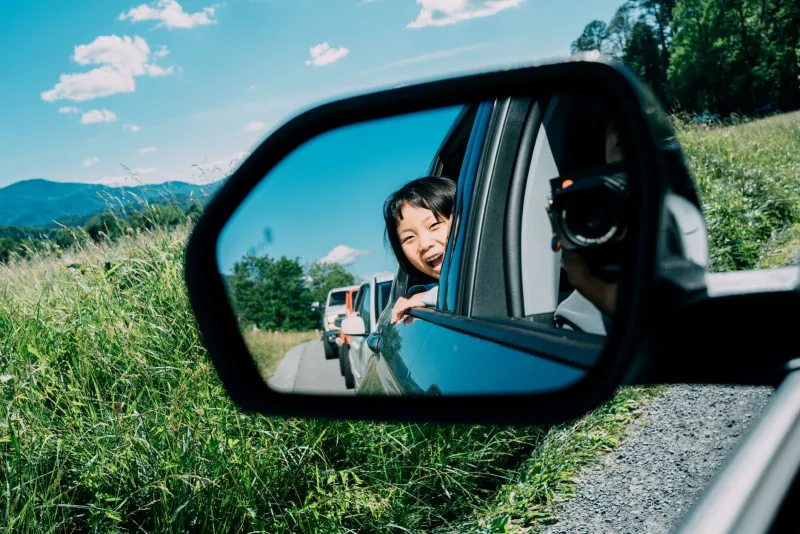
Before interstate highways flattened the country into predictable sameness, the American road trip was a genuinely democratic adventure. Families piled into station wagons and followed two-lane routes through small towns where the motels were locally owned, the signs were hand-lettered, and the owners actually lived on the property. The motel wasn't just lodging — it was a node in a network of American community life.
Historian and road culture writer Dani Forsythe has spent years documenting what she calls "the vanishing grammar of mid-century hospitality." She puts it plainly: "The independent motel was where working-class families got to travel. Before credit cards, before loyalty points, before all of it — you saved your money, you hit the road, and you pulled into a place where someone handed you a key attached to a plastic fob shaped like a fish or a pine tree. That was the experience. It was humble and it was real."
What's remarkable is how many of those places still exist — particularly in mountain communities, where the pace of development has been slower and the old bones of roadside America have been allowed to stand.
Walking Into a Room That Remembers
Carol and Dennis Mahler have owned a small motel outside of a western Montana town for going on eighteen years. They bought the property from the original owner's daughter, who had grown up in the on-site manager's cottage and could point to every architectural choice her parents had made in 1957.
"The knotty pine paneling in rooms four through seven — that was her dad's weekend project one summer," Carol says. "He drove two hours to get the lumber because he wanted it to be right. We were never going to tear that out."
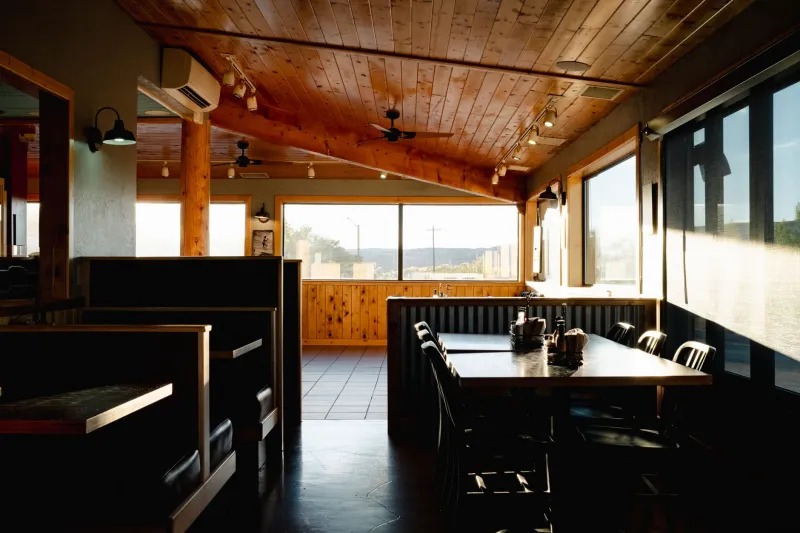
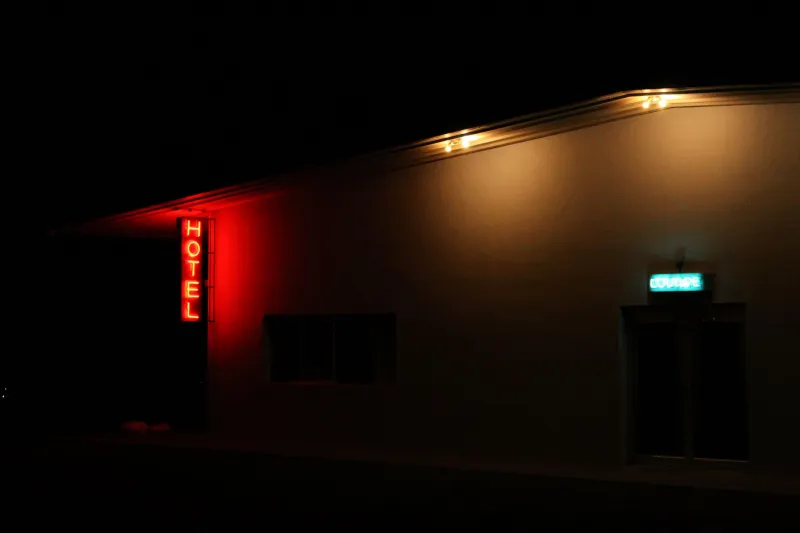
The Mahlers have made a deliberate choice to preserve rather than renovate. The vintage neon sign out front still works, repaired by an electrician who drove four hours because he'd never worked on one like it and wanted to learn. The bathroom tile in the older rooms is the original ceramic, in colors that design blogs now call "retro" but were simply called "the bathroom" back then.
Guests notice. More than that, guests respond.
"We get people who walk in and just stop," Dennis says. "And sometimes they'll say something like, 'My grandmother had curtains exactly like this.' Or they'll take a picture of the door hardware. We've had guests cry. Not in a sad way — just in a way where something they didn't know they were carrying finally had somewhere to land."
When a Budget Stay Becomes a Personal Archive
That's the thing about authentic vintage spaces that no amount of themed décor can replicate: they carry actual memory. Not curated memory, not branded nostalgia — real accumulated time, embedded in the materials themselves.
A traveler named Marcus, who road-tripped through Montana two summers ago with his teenage son, describes stopping at a small motel along a state highway and recognizing the layout from a photograph he'd seen in a shoebox at his grandmother's house.
"My grandparents did a road trip through the West in the early 1960s," he says. "I'd always assumed those photos were just... somewhere generic. But the room configuration, the way the parking lot curved — I pulled up the old photo on my phone and showed my son. We stood there in the parking lot for probably twenty minutes just piecing it together. I don't know for certain it was the same place, but it felt like it. And that feeling mattered."
This is the kind of travel experience that costs sixty or seventy dollars a night and delivers something no resort package can price.
What's Worth Saving — And Why It's Disappearing
The threat to these spaces isn't malicious. It's economic and generational. Original owners age out. Their children, who may have grown up working the property rather than loving it, sell to developers or simply let the buildings go. In mountain communities, rising land values add pressure. A vintage motel sitting on a prime lot near a ski corridor or a national park entrance is worth more as something else than as a piece of living history.
Some preservation advocates argue that the motel form deserves the same attention as historic main streets or old courthouses. "These were the infrastructure of American mobility," says Forsythe. "They're as significant as any railroad depot. But because they were cheap and functional and served ordinary people, they've never had the same cultural cachet as grander architecture. That's a class bias built into how we think about heritage."
A handful of state and local historic preservation programs have started to take note, offering tax incentives or grant support for motel owners who maintain original features. It's slow going, but it's something.
How to Travel Like You Actually Care About History
You don't have to be a preservation advocate to be part of the solution. You just have to choose where you stay with a little more intention.
When you book a night at an independently owned mountain motel — especially one that hasn't been gutted and renovated into something generically contemporary — you're voting with your travel dollars for the survival of something irreplaceable. You're also, almost certainly, getting a better story out of it.
Ask the owner about the building. Ask when it was built, who built it, what's been kept on purpose. Most owners of historic properties are thrilled to talk about it. The stories are usually better than anything you'd read on a historical marker.
Bring a little curiosity and leave the expectation of perfection at home. The drawer that sticks, the window that rattles, the ice machine down the hall that sounds like it's working something out — that's not inconvenience. That's texture. That's time.
The Museum Experience You Didn't Expect
America has plenty of museums dedicated to road culture — Route 66 interpretive centers, classic car collections, exhibits about the golden age of the American drive-in. They're worth visiting. But there's a version of that history you can actually sleep inside, and it's still out here, still lit up, still handing out keys on fobs shaped like fish or pine trees.
The mountain towns of the American West have held onto more of it than most. The pace out here has allowed things to survive that the coasts and the interstates have long since paved over. If you're looking for a genuine connection to the country's mid-century road culture — not a replica, not a theme, but the actual thing — the back roads of Montana and the small-town motels along them are as good a place to start as any.
Pull in. Check in. Let the room tell you what it knows.