Cheap Room, Rich Work: How Small-Town Motels Became the New Artist Residency
There's a certain kind of creative retreat that gets written about a lot. The kind with a waiting list, a stipend application, and a letterhead that includes the word "foundation." You spend eighteen months hoping to get in, and if you do, you show up to a converted barn in Vermont or a coastal compound in Maine with forty other artists who are all, more or less, doing the same thing you are.
That's great. Genuinely. But it's not the only way.
A quieter movement has been building for a while now — one that doesn't have a brochure or a grants committee. Writers, painters, musicians, and photographers are driving out to small mountain towns, pulling into budget motels, and doing the work. No application required. No cohort. No scheduled dinner conversation about process. Just a room, a view, and enough silence to finally hear what they've been trying to say.
What the Stripped-Down Room Actually Does for You
Ask anyone who's tried it and they'll tell you something similar: the lack of stuff is the whole point.
When your environment is simple — a bed, a desk, a window, maybe a coffeepot that takes three tries to get going — your brain stops cataloging and starts creating. There's nothing to rearrange, nothing to clean, nothing to upgrade. The usual domestic friction disappears. You're not a homeowner or a renter or a person with a junk drawer. You're just a person with an idea and a few hours to work on it.
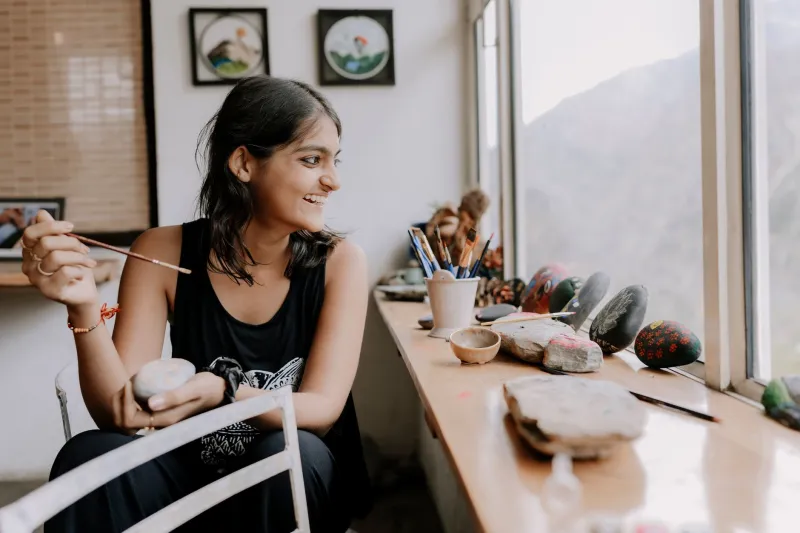
Lucia, a watercolor painter from Denver, started booking motel rooms in small Montana towns a few years back after a grant-funded residency left her feeling overscheduled and underinspired. "I had this beautiful studio space and a whole community of peers, and I painted almost nothing," she says. "I came home, drove up to a little town near the Beartooth Highway, checked into a motel for a week, and finished eight pieces. The room was nothing fancy. That was exactly why it worked."
The psychology here isn't complicated. Constraint is a well-documented creative catalyst. When your options are limited, your attention narrows. And a motel room — especially a modest one in a place where the nearest coffee shop closes at two — is constraint in its purest form.
The Mountain Town Factor
It's not just about the room, though. It's about where the room is.
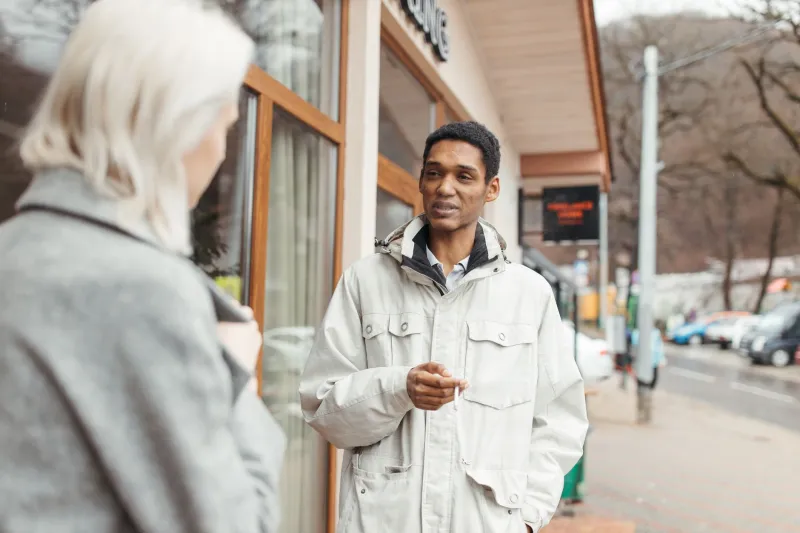
Rural mountain communities have a particular quality of light, a particular pace, and a particular kind of human interaction that doesn't exist in cities or resort towns. People talk to you at the diner. The guy at the hardware store has lived here his whole life and has opinions about the weather that turn out to be genuinely interesting. The landscape isn't curated — it's just there, indifferent and enormous, doing what it does regardless of whether you notice.
For artists, that's a lot to work with.
Marco, a songwriter from Nashville, spent three weeks in a small Wyoming town last winter finishing an album that had been stuck for the better part of a year. He booked the cheapest room he could find, brought his guitar and a portable recorder, and mostly just walked around and talked to people. "I wasn't looking for material," he says. "But it found me anyway. Small towns have this density of story that you don't get in places where everyone's moving fast. I ended up writing a song about a conversation I had at a gas station. It's one of the best things I've ever done."
That's the thing about mountain towns that haven't been overrun by tourism: the stories are still local. The bar has a history. The motel has regulars. The woman at the front desk remembers when the road outside was unpaved. You can't buy that kind of texture, but you can check into the middle of it for sixty bucks a night.
Why It Beats the Expensive Alternative
Creative retreats at dedicated arts centers can run anywhere from a few hundred to several thousand dollars a week, depending on the program and location. Some cover room and board; others don't. Most require an application, a portfolio, and a willingness to participate in programming that, depending on the week, may or may not align with what you actually need.
A motel room in a small mountain town costs a fraction of that. You set your own schedule. You eat when you want. You work at midnight if that's when the ideas come. Nobody's asking you to share your process at Thursday's group critique.
There's also something to be said for the lack of performance pressure. At a formal residency, there's often an unspoken expectation that you'll produce something — or at least look like you're producing something. In a motel room in a town where nobody knows you're an artist, you can fail quietly, try weird things, throw it all out, and start over. The anonymity is protective.
Danielle, a novelist from Chicago, has been doing what she calls "budget residencies" for the past four years. She picks a different small mountain town each time, books a week at a local motel, and writes. "I've gotten more done in those weeks than in any other stretch of my writing life," she says. "And I've spent less money on all four trips combined than I would have on one week at a traditional retreat center."
How to Do It Right
If you're thinking about trying this yourself, a few things make the difference between a productive week and a week where you mostly watch TV and eat vending machine chips (though honestly, even that has its value).
Pick a town with some life to it. You want isolation, but not total emptiness. A main street with a diner, a hardware store, and maybe a bar gives you just enough social texture to keep your brain from going completely inward. Mountain towns in the Northern Rockies — parts of Montana, Wyoming, and Idaho — tend to hit this balance well.
Book longer than you think you need. The first day or two are usually decompression. The real work starts around day three, once your nervous system settles down and stops waiting for something to happen.
Leave the good headphones at home. Silence is the whole point. Let the room be quiet. Let the town be quiet. Let your brain get bored enough to get creative.
Talk to people. Not in a forced, research-y way — just normally, the way you would if you lived there. The conversations you have at the counter of a small-town diner will end up in your work whether you intend them to or not.
The Room Is the Retreat
There's a version of creative life that requires a fellowship, a residency, a grant, a cohort, and a carefully curated environment. And then there's the version where you pack your car, drive until the mountains get big, and check into a room that costs less than a nice dinner.
Both can work. But only one of them is available to you this weekend.
The motel room has always been a place of transition — somewhere between where you were and where you're going. Turns out, that in-between space is exactly where a lot of the best creative work gets done.