Sleeping in Yesterday: What a Night in an Unchanged Motel Room Teaches You About the Place You Call Home
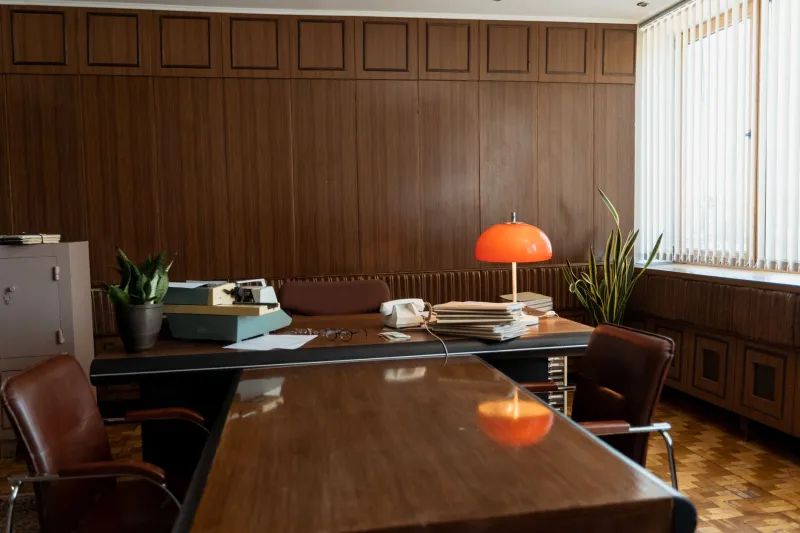
You notice it the second the door swings open. The smell hits first — a faint blend of cedar, old carpet, and something vaguely floral that no modern diffuser has ever successfully replicated. Then your eyes adjust. Burnt-orange bedspread. Laminate dresser with a mirror bolted above it. A rotary-style phone that probably hasn't rung since the Clinton administration. A TV remote the size of a brick.
You haven't stepped into a museum. You've just checked into a small-town motel that never saw a reason to change — and honestly? That's exactly the point.
The Room That Time Forgot (On Purpose)
Across rural Montana and the wider mountain West, there are motels that have been quietly operating for decades without a single renovation trend touching their interiors. No shiplap. No Edison bulbs. No curated gallery walls featuring local artists. Just rooms that look the way rooms looked when they were first built — functional, unfussy, and completely indifferent to what's currently popular on design blogs.
For some travelers, that's a dealbreaker. For a growing number of others, it's the whole reason to book.
What these spaces offer isn't nostalgia in the kitschy, self-conscious sense. It's something quieter and more personal. When you remove the design language of the present — the muted greiges, the floating shelves, the smart TVs mounted flush to the wall — you also remove a certain kind of ambient pressure. The pressure to be current. To be aspirational. To perform a version of yourself that fits the aesthetic.
A room with avocado-green tile and a chenille bedspread doesn't ask anything of you. It just exists, and somehow that's a relief.
Why Your Brain Does Something Different in These Spaces
There's a psychological phenomenon called environmental context-dependent memory — the idea that physical surroundings can trigger memories and emotional states associated with similar spaces from the past. Walk into a room that looks and smells like your grandmother's house, and your nervous system doesn't just notice the similarity. It responds to it.
Vintage motel rooms operate on this same principle, even for people who never lived through the era being referenced. The sensory specificity of a genuinely old space — the weight of a heavy analog clock on the nightstand, the particular hum of a window AC unit, the way lamplight bounces off wood-paneled walls — creates a kind of temporal displacement that modern interiors simply can't manufacture.
You don't have to have grown up in the 1960s to feel the stillness of a room that was designed in that decade. The absence of the present is enough. Without the visual cues of now, your brain stops orienting itself around the current moment and starts floating a little. And in that float, things get interesting.
What Comes Up When the Design Noise Goes Away
Travelers who regularly seek out these kinds of stays — the unchanged roadside motels, the family-run operations in small Montana towns where the same quilts have been on the beds for thirty years — often describe a similar experience. They get unexpectedly thoughtful.
Not in a forced, retreat-center way. More like the way you get thoughtful on a long drive when the radio cuts out and you stop reaching to fix it.
Without the visual stimulation of a designed space competing for your attention, the mind tends to turn inward. People report thinking about their childhoods, their parents' homes, the apartments they've left behind. They think about what they actually want from the place where they sleep every night — and whether what they have matches that.
It sounds like a lot to attribute to a burnt-orange bedspread. But the bedspread isn't really the point. The simplicity is the point. The room's refusal to impress you is, paradoxically, what makes it impressive.
The Question the Room Is Actually Asking
Here's the thing about home: most of us have a complicated relationship with what that word means. We've moved too many times, or not enough. We've lived in spaces that didn't fit us, or outgrown spaces that did. We carry mental blueprints of what home is supposed to feel like — blueprints assembled from childhood bedrooms, family vacations, movies, and the homes of people we've loved.
A vintage motel room, in its stripped-down authenticity, has a way of surfacing those blueprints. It's not trying to be your home. It's not trying to be anyone's home. And yet something in its particular combination of textures, proportions, and quietness lands close to a feeling you recognize.
That recognition is worth paying attention to.
Some people come away from these stays realizing they want less — fewer things, simpler rooms, more quiet. Others realize they've been craving warmth and texture and color and have been living in spaces too afraid of commitment to offer any. A few just feel a wave of gratitude for the specific, imperfect home they actually have waiting for them.
None of these are wrong conclusions. They're just honest ones, and honest ones are hard to come by when you're surrounded by interiors designed to make you feel a certain way.
Finding the Real Thing
If this kind of experience sounds worth chasing, the good news is that it doesn't require a lot of research or money. Small-town motels in mountain communities — the kind that have been run by the same family for two or three generations — are often exactly what you're looking for. They're affordable, they're genuinely local, and they haven't been renovated into sameness.
Look for the places with hand-painted signs. The ones where the front desk is staffed by someone who actually owns the building. The ones where the parking lot has been repaved once, maybe twice, and the room numbers are still screwed onto the doors with the original hardware.
Book for a weeknight if you can. Bring less than you think you need. Leave the laptop in the car.
Then sit in that room for a while — the one with the outdated bedspread and the analog clock — and let it ask you its quiet question.
You might be surprised what answer comes up.