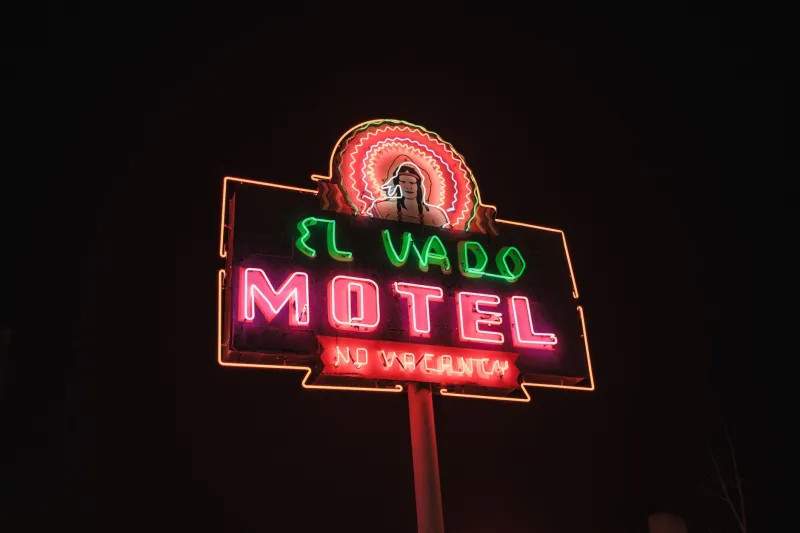
Where the Motels Are: Reading America's Rural Heartbeat One Vacancy Sign at a Time
Pull up a map of independent budget motels across rural America and you'll notice something right away. They don't scatter randomly. They cluster. They thin out. They disappear entirely in some stretches, then reappear in dense little constellations around towns you've probably never heard of. If you know how to read it, that map is one of the most honest economic documents in the country.
Big data tells us a lot about urban centers. Venture capital tracks what's growing, what's contracting, what zip codes are "up and coming." But rural America tends to fall through the cracks of that analysis. The motel, though — that stubborn, neon-lit, slightly-faded American institution — has been quietly keeping its own ledger for decades.
The Cluster That Means Something Is Working
Drive through the mountain communities of western Montana, the foothills of North Carolina, or the high desert of eastern Oregon and you'll find pockets where small motels are not just surviving — they're genuinely busy. Not busy in a resort-town way, with valet parking and spa packages. Busy in the way that matters to a local economy: steady occupancy, return guests, a parking lot with out-of-state plates mixed in with in-state trucks.
These clusters usually signal a few things happening at once. There's often a working industry nearby — timber, agriculture, mining, or some form of outdoor recreation that draws visitors without requiring a five-star infrastructure. There's a highway that still sees traffic. And critically, there's usually a town that still has a hardware store, a diner, and a gas station that isn't a ghost.
Susan Haller has owned a 14-room motel outside a small Montana town for going on eighteen years. She describes her occupancy rate as a kind of community weather report. "When the logging contracts are good, I'm full on weekdays," she says. "When things slow down, I feel it before the local paper even runs a story about it."
She's not exaggerating. The motel owner, by necessity, becomes an economic sensor. Contractors book rooms when there's work. Families pass through when they have somewhere to go. Salespeople stop when there are businesses worth calling on. Take away any one of those threads and the vacancy sign starts staying lit a little longer each night.
The Absence That Tells a Harder Story
Then there are the stretches where the motels are gone.
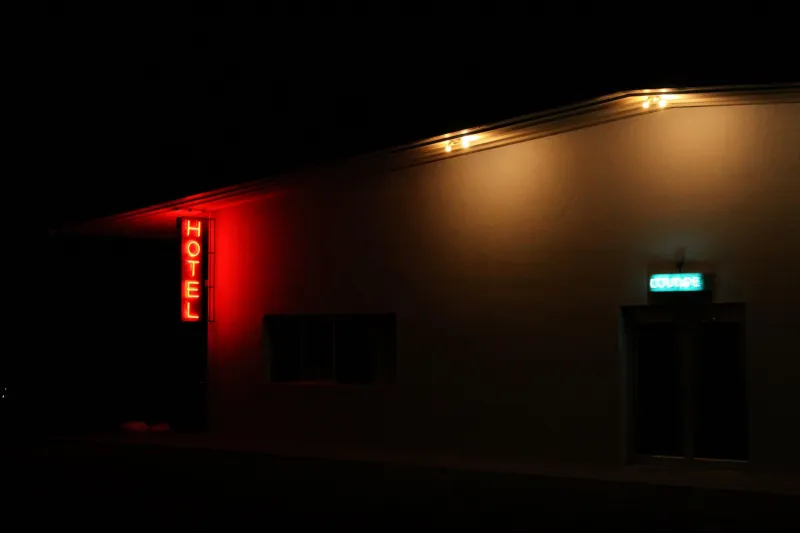
Not closed for the season. Gone. The buildings are still there sometimes — a rectangular concrete shell behind a gas station, a roadside structure with the office windows boarded up and a faded name painted on the side. These are the places where the economic story got too heavy to carry.
Rural sociologists have written about the concept of "service deserts" — communities that have lost so much commercial infrastructure that basic needs become difficult to meet. The motel is rarely mentioned in that literature, but it probably should be. When a town loses its last budget motel, it loses something harder to name than just lodging. It loses the capacity to receive people. Travelers skip it. Workers can't stay for a job. Families passing through don't stop for dinner because there's no reason to linger.
In parts of the rural Midwest, entire counties have no lodging options at all. Not a motel, not a bed and breakfast, not a vacation rental worth mentioning. Local officials in those counties will tell you it's one of the quiet barriers to economic development that nobody talks about in the grant applications.
Adapting in Real Time
The most interesting places on the map aren't the ones that are clearly thriving or clearly struggling. They're the ones in the middle — towns and motel owners who are actively figuring it out.
In a small Colorado mountain town, a motel owner named Ray converted four of his twelve rooms into longer-term rentals two years ago when a wave of remote workers started looking for affordable places to land for a month at a time. "I didn't plan it," he says. "A woman called and asked if I'd do a monthly rate, and I said sure, and then three more people called that same week."
What Ray stumbled into was a real pattern. As remote work reshuffled where people could live, some of that reshuffling landed in rural mountain towns — and the budget motel, with its low overhead and flexible booking, was often better positioned to absorb that shift than a traditional rental market with leases and deposits.
In other communities, motel owners have adapted by leaning hard into the outdoor recreation economy. Clean, cheap rooms near a trailhead or a river access point don't need to compete with boutique hotels. They just need to be there, be functional, and be affordable for the hikers and fly fishers who'd rather spend their money on gear than on a pillow menu.
What the Map Doesn't Show
For all the information encoded in the geography of rural motels, there's something the map can't capture: the human texture of what these places mean to the communities around them.
The motel parking lot that doubles as an informal gathering spot. The owner who knows which local restaurants are still open on Tuesdays. The front desk that's given directions to the same waterfall a thousand times and still does it with genuine enthusiasm. These are the things that don't show up in economic analyses but are absolutely part of why certain communities hold together while others don't.
Small-town lodging, at its best, is connective tissue. It links the people passing through to the people who live there. It keeps money circulating locally in a way that a chain property with centralized revenue reporting simply doesn't.
Next time you're driving a two-lane road through somewhere unfamiliar and you see a motel sign — especially one that's lit, especially one with cars in the lot — take a second to notice it. That sign is telling you something real. It's saying: people come here. People stay here. This place is still on the map in every sense that matters.