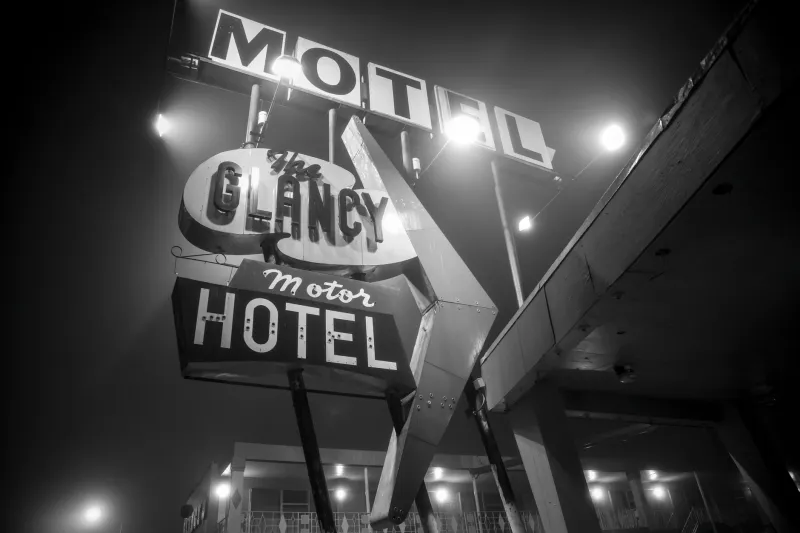
Avocado Green and Absolute Confidence: What Old Motel Rooms Tell Us About American Hope
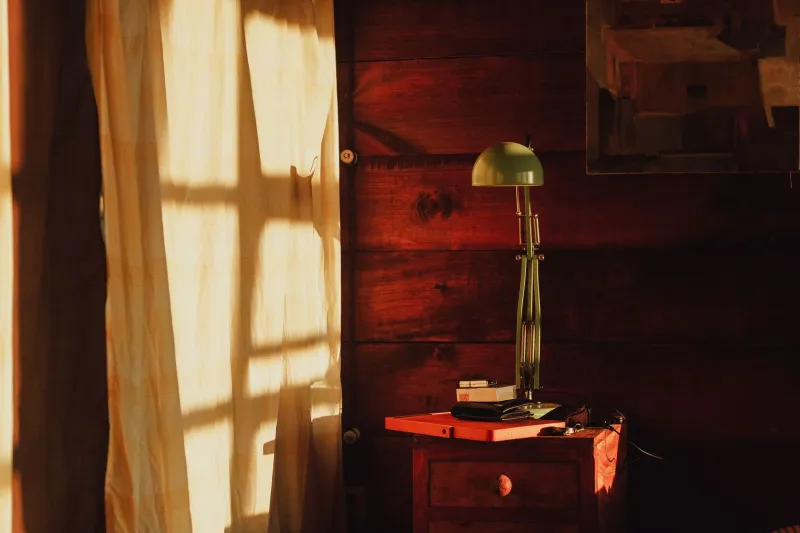
There's a moment that happens in certain motel rooms — usually somewhere off a two-lane highway in Montana or Wyoming or the rural stretch of wherever you happen to be — when you set your bag down and realize the room hasn't really changed since, say, 1971. The carpet is a burnt sienna that no longer exists in nature. The tile in the bathroom is a confident shade of avocado green. The wood paneling runs floor to ceiling like it owns the place, because once upon a time, it absolutely did.
Your first instinct might be to laugh a little. Your second instinct, if you give it a minute, is something quieter and harder to name.
These rooms weren't decorated by accident. They were decorated with conviction.
The Design Choices That Felt Like the Future
To understand why a motel room from 1968 looks the way it does, you have to understand what 1968 felt like to the person who built it. America was in the middle of a decades-long love affair with synthetic materials, bold color, and the idea that modern living was something you could manufacture on demand. Formica countertops, laminate furniture, and wall-to-wall carpet weren't compromises — they were technological achievements. They were easy to clean, affordable to produce, and they signaled something important: that comfort was no longer a luxury reserved for the few.
The motel itself was part of that promise. The interstate highway system was still being stitched together across the country, and roadside lodging was expanding to meet a nation that had just discovered it could go anywhere. Motel owners weren't building budget accommodations. They were building monuments to the idea that every American family deserved a clean room with a color TV and a swimming pool that glowed turquoise at night.
That avocado-green fixture in the bathroom? It was chosen because it felt modern. It felt like the future. It felt like something worth being proud of.
When Permanence Was the Point
One of the things that strikes you most about vintage motel décor is how permanent it was meant to be. The tile patterns, the wood paneling, the terrazzo lobby floors — these weren't trendy flourishes that owners planned to swap out in five years. They were investments in a specific vision of what a good place should look and feel like.
There's something almost touching about that now. We live in an era of fast furniture and interchangeable aesthetics, where a room's design is expected to photograph well and then quietly disappear into the next refresh cycle. But the people who built these rooms were betting on their own taste. They were saying: this is right, and it will still be right in twenty years.
Some of them were wrong, of course, in the narrow sense that avocado green eventually stopped being fashionable. But there's another way to look at it. Those rooms are still standing. The tile is still there. The paneling hasn't gone anywhere. In a strange way, they won the permanence argument by default — not because the style lasted, but because the construction did.
What Staying in These Rooms Actually Feels Like
If you've ever spent a night in a genuinely unchanged vintage motel room — not a renovated-to-look-retro boutique property, but an actual time-locked room in a family-run place that simply never had the budget or the reason to update — you know it produces a very particular feeling.
It's not discomfort, exactly. The bed works. The shower gets hot. The room does everything a room is supposed to do. But there's a low hum of displacement that follows you around, a sense that you've arrived somewhere that exists slightly outside of regular time. You notice things you wouldn't notice in a generic updated room: the satisfying weight of a rotary-style light switch, the particular acoustic flatness of wood-paneled walls, the way the bathroom mirror has a slight warmth to its reflection that modern glass doesn't replicate.
You start to wonder about the people who stayed here before you. Not in a ghost-story way — more in a what were they thinking about way. What did the couple in this room in 1974 talk about after they turned the TV off? What did the salesman in the corner unit write in his notebook at the desk that's still sitting in the corner?
The room holds all of that without being able to tell you any of it. That's the particular ache of a time capsule.
The Nostalgia Question
It's worth asking why so many people feel a pull toward these spaces when they encounter them. Nostalgia is the easy answer, but it's not quite right — most of us weren't alive when these rooms were new. We're not remembering something we experienced. We're grieving something we never had.
Maybe what we're responding to is the confidence itself. There's a kind of optimism baked into mid-century American design that's genuinely hard to find in contemporary aesthetics. The color choices, the material choices, the sheer boldness of it all — it came from a culture that believed things were going to keep getting better. That a family vacation was worth investing in. That a roadside motel in a small mountain town was a destination worth making beautiful.
We're not sure we believe that anymore, or at least we don't express it the same way. Contemporary hospitality design tends toward the neutral and the safe — greige walls, white linens, fixtures that won't offend anyone. It's a design language built around the fear of being wrong rather than the joy of being right.
The old rooms weren't afraid of being wrong. That's either their flaw or their greatest quality, depending on where you're standing.
Why Small-Town Motels Are the Last Keepers of This Story
The places where you're most likely to find these rooms intact are exactly the places you'd expect: small towns in mountain states, rural highway stops, family-owned operations that have been passed down a generation or two without a major renovation budget ever materializing. In a lot of ways, that's lucky. The economic pressures that would have erased these interiors in a bigger market never arrived. The rooms survived by being overlooked.
Staying in one of these places isn't just a budget choice — though it often is that too, and there's nothing wrong with that. It's a chance to spend a night inside a specific American moment, to feel the texture of a particular kind of hope that the country used to carry around more openly.
The harvest-gold bedspread. The turquoise pool light. The wood paneling that runs all the way to the ceiling.
Somebody built all of that with their hands and their savings and their belief that it was worth doing right. The least we can do is show up and pay attention.