What's in the Drawer: The Small Kindnesses Hidden Inside Small-Town Motel Rooms
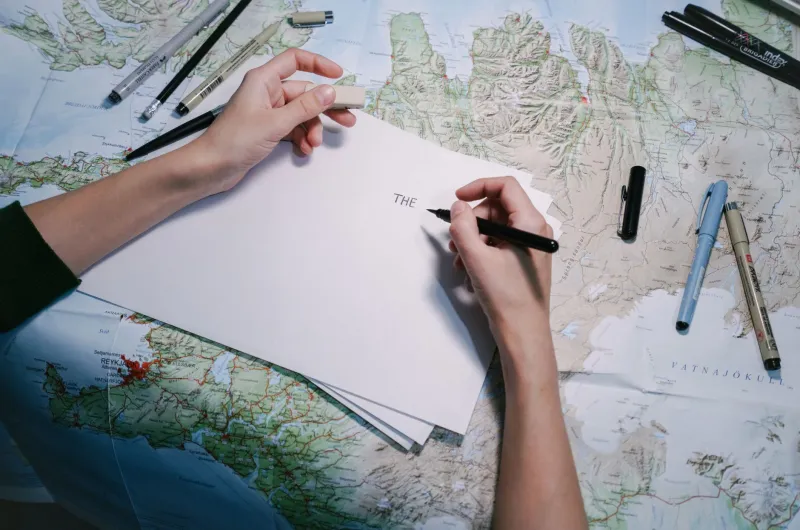
You didn't come to the room looking for anything meaningful. Maybe you needed a notepad. Maybe you were hunting for the TV remote. But you pulled open that desk drawer anyway, and there it was — a hand-folded piece of paper with directions to a waterfall the highway signs never mention, written in someone's careful cursive, the ink slightly smudged like it was done in a hurry before checkout.
That's the thing about small-town motel rooms. The surprises aren't usually in the amenities. They're in the details nobody planned for.
The Drawer as a Quiet Tradition
Chain hotels have standardized everything — the same branded notepad, the same laminated directory, the same Bible placed with institutional precision. But walk into a family-run motel in a rural Montana valley or a sleepy Wyoming crossroads town, and the desk drawer tells a completely different story.
Owners of independent motels have a habit — sometimes deliberate, sometimes accumulated over years — of turning that drawer into a kind of local welcome kit. A stack of takeout menus from the diner three blocks over, dog-eared and coffee-stained from actual use. A coupon for 10% off breakfast at a place that doesn't even have a website. A photocopied trail map with handwritten notes in the margins: muddy in spring, worth it anyway.
None of it is polished. All of it is useful.
And that's precisely the point.
When Strangers Leave Something Behind
Not everything in the drawer comes from the owner. Some of the most memorable finds are left by previous guests — travelers who wanted to pass something forward, the way hikers leave trail markers for the people behind them.
A family from Colorado once tucked a note inside a Montana motel drawer that simply read: The pie at the place on Main Street is the real reason to stop here. Get the huckleberry. You're welcome. No name. No date. Just the kind of tip that a friend would give you over the phone if they'd been there first.
That's the micro-community these drawers quietly build. Strangers talking to strangers across time, leaving small gifts that cost nothing but carry real weight. It's a form of generosity that doesn't require eye contact or even shared space — just the assumption that whoever opens this drawer next is someone worth helping.
What the Owners Are Really Saying
When a motel owner slips a handwritten note into the drawer — directions to a fishing hole, a reminder that the hardware store doubles as the best place to get local hunting licenses, a warning that the road to the overlook gets icy by October — they're doing something that goes beyond hospitality as a business transaction.
They're saying: I know this place, and I want you to know it too.
That's not something you can scale. It doesn't survive the transition to a franchise. It only exists in places where the person handing you the key is the same person who grew up here, raised kids here, watched the town change and stay the same. The drawer becomes an extension of that knowledge — a way of sharing what they can't always find the words to say at check-in.
Some owners have turned it into a genuine ritual. One motel in a small mountain town reportedly refreshes the drawer contents seasonally — summer brings fishing maps and festival schedules, winter swaps them out for snowshoe trail guides and the hours of the one coffee shop that stays open past noon. Guests have started mentioning it in reviews not as a novelty but as a reason to return.
The Human Geography of a Four-Inch Drawer
Open one of these drawers and you're holding a kind of unofficial census of the town. What's in there tells you what the locals are proud of, what they assume you'll want, what they think is worth your time. The absence of chain restaurant coupons says something. So does the presence of a phone number written on a sticky note with the words call Earl if you need firewood.
This is local knowledge in its most compressed form. Not curated for a travel app. Not optimized for engagement. Just real, practical, human information passed from one person to another through the medium of a slightly sticky drawer in a room that smells faintly of pine cleaner and mountain air.
In that sense, the drawer is doing more than any lobby brochure rack ever could. It's building trust. It's saying that the people here have thought about you — a stranger they've never met — and decided you deserve to know the good stuff.
Why It Matters More Now
We live in a moment when travel has become increasingly algorithmic. The apps tell us where to eat, the reviews tell us what to expect, the influencers tell us how to feel about it. There's a comfort in that, sure. But there's also something lost — the friction, the discovery, the sense that you found something instead of being directed to it.
The motel desk drawer is friction in the best possible sense. It requires nothing of you except curiosity. You open it, you find something unexpected, and you make a choice. Do you follow the handwritten directions to the trailhead? Do you call the number for Earl and his firewood? Do you leave your own note for the next person?
More often than not, the answer is yes. And that's when a budget motel stay in a town you'd never heard of becomes the trip you actually remember.
Leave Something Behind
Here's the part that doesn't get said enough: you can contribute to this tradition. If you found a spot worth knowing about, write it down. If you have a coupon you won't use, leave it. If the pie really was that good, say so.
The drawer doesn't have to be a one-way conversation. It's a running letter between travelers, mediated by the motel itself — an institution that, at its best, exists not just to give you a place to sleep but to connect you to the place you've landed in.
Small-town motels have always understood something that bigger hospitality brands are still trying to figure out: people don't just want a room. They want to feel like they belong somewhere, even for just a night or two.
Sometimes that feeling starts with a folded piece of paper and a stranger's handwriting telling you exactly where to go.