Forty-Eight Hours, No Spending, No Excuses: The Accidental Budget Reset That Changed How People Think About Money
There's a version of travel that costs a lot of money and doesn't require you to think about money at all. The resort handles everything. The minibar is stocked. The spa is one phone call away. You check out with a bill that makes you wince, but you tell yourself it was worth it, and you swipe the card, and you don't really look at the number.
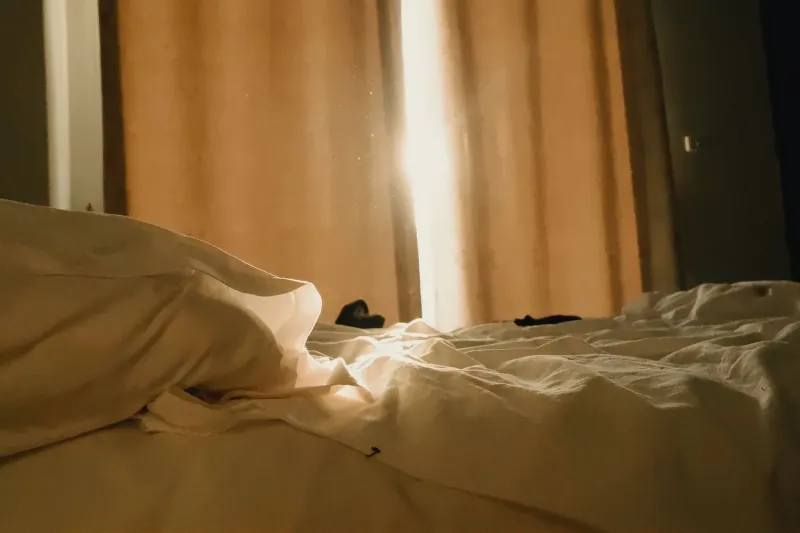
And then there's the other kind of trip. The kind where you pull into a small-town motel after a long drive, pay cash for one night, carry your own bag to the room, and sit down on the edge of the bed in a space that is clean and functional and contains almost nothing you could spend money on even if you wanted to.
For a growing number of people, that second kind of trip has turned into something unexpected: a financial turning point.
The Spending Fast Nobody Planned
Marcus, a 34-year-old teacher from Arizona, didn't set out to do a spending detox. He booked a budget motel in a small mountain town because it was what he could afford after a rough financial year. "I was carrying about nine thousand dollars in credit card debt," he says. "I'd gotten into this cycle where I'd treat myself to things to feel better about the debt, which made the debt worse, which made me treat myself more."
He spent two nights in a $48-a-night room with a mountain view, a working TV, and a coffee maker. That was it. There was nowhere nearby to shop. The one restaurant in town closed at eight. He took a long walk, read a book he'd brought, and slept nine hours.
"By the second morning I felt like something had loosened," he says. "I hadn't spent anything except the room. I hadn't wanted to. And I started thinking: what if that's just... what I do for a while?"
He came home and spent the next three months living as simply as he could. He paid off the debt in seven months.
Marcus's story isn't unique. It comes up again and again when you talk to people who've stayed in budget motels — not as a hardship, but as a deliberate or accidental choice that ended up reframing how they thought about spending.
The Psychology of Subtraction
Consumer psychologists have a term for the phenomenon Marcus experienced: "environmental cueing." The idea is that our spending behavior is heavily influenced by the environment we're in. A hotel lobby with a boutique, a bar, and a spa menu is an environment designed to prompt spending. A bare motel room with a coffeemaker and a parking lot view is not.
When you remove the cues, the urge to spend doesn't just pause — it sometimes disappears entirely. And in that absence, people often start to examine what the spending was actually doing for them.
Jessica, a 41-year-old from Nashville who works in marketing, started deliberately booking cheap motel stays after reading about spending fasts online. "I'd tried no-spend challenges at home, but home is full of stuff I've already bought that reminds me of buying," she says. "A motel room is neutral. It's someone else's space. There's nothing there that belongs to me."
She books one weekend a quarter at a small-town motel within a few hours of home. She brings food, a journal, and nothing with a price tag. "It's the clearest thinking I do all year," she says. "I always come home and cancel something — a subscription, a habit, a thing I was about to buy."
What the Room Teaches You
There's something specific about the budget motel room that does this work. It's not just the absence of spending opportunities. It's the presence of enough.
A bed. A shower. A window. Heat or air conditioning. Maybe a small table where you can sit and think. The motel room at its most basic is a demonstration that you can be comfortable — genuinely comfortable — with very little. That demonstration lands differently when you're actually living it for 48 hours than when you're reading about minimalism in a magazine.
Dan, a 29-year-old freelancer from Colorado, spent a week at a mountain motel after losing a big client and facing some hard decisions about his finances. "I didn't go there to figure anything out," he says. "I went because it was cheap. But something about being in a room with nothing extra in it made me realize how much of what I spent money on at home was just... noise."
He came back and moved to a smaller apartment. He's been financially stable for two years.
The Motel as a Mirror
None of this is to say that budget travel is a cure for financial stress. Debt is complicated. Spending habits are complicated. But there's something genuinely useful about a space that strips away the commercial layer of travel and leaves you with just the basics.
The small-town motel doesn't judge what you've spent. It doesn't upsell you. It doesn't have a loyalty program designed to keep you inside the spending ecosystem. It gives you a room, a key, and a morning where the only thing on the agenda is whatever you decide.
For some people, that morning is just a morning. For others, it's the beginning of a different relationship with money — one that started in a $45 room in a town they'd never heard of, with nothing to spend and nowhere to be.
Sometimes the most valuable thing a room can offer is the chance to stop.


