The Invisible Network: How Motel Regulars Are Building the Most Honest Travel Guide You'll Never Find Online

Photo by Photo by Peter Robbins on Unsplash on Unsplash
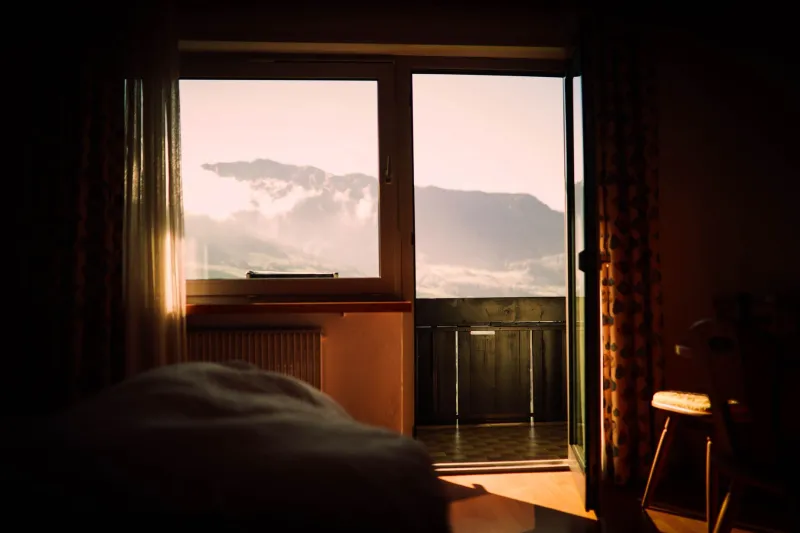
Somewhere between the parking lot and the vending machine, a retired schoolteacher from Billings is telling a road-tripper from Ohio exactly which room at a small Montana motel faces the ridge that glows pink at sunrise. No app sent her a notification. No algorithm matched them. She just knows, because she's stayed here four times, and she remembers.
That's it. That's the network.
It doesn't have a name. It doesn't have a logo or a terms-of-service agreement. But if you've spent enough nights in small-town budget motels, you already know it exists. You've been part of it without realizing it. And it is, quietly and without any fanfare, one of the most useful travel resources in the country.
Word of Mouth Never Really Left — It Just Moved Outside
Travel planning has been thoroughly colonized by the internet. Review platforms, influencer itineraries, algorithm-curated destination guides — it's a lot. And most of it is optimized for engagement, not accuracy. The photo is always better than the place. The rating never captures the thing that mattered most.
But talk to anyone who stays regularly at small-town motels — the kind of places with exterior corridors, hand-lettered signs, and front desk clerks who actually remember your name — and you'll hear a different story. These guests trade information the old-fashioned way: face to face, with eye contact, with genuine intent to help.
The tips you get in a motel parking lot are different from anything you'd find on a review site. They're specific. They're current. And nobody's getting paid for them.
"Room 7 gets the afternoon shade and it's quieter," someone might tell you at checkout. "Ask Linda at the desk about the trail behind the water tower — it's not on any map but it's worth every step." That kind of local, layered knowledge doesn't get indexed by search engines. It lives in the moment, passed between people who have no reason to mislead each other.
The Front Desk as Information Hub
In small-town motels, the front desk is doing a lot more than processing credit cards and handing out keys. It's functioning as a clearinghouse for local knowledge — and the best desk clerks are absolute treasures.
These are people who've heard thousands of travelers describe what they're looking for. They know which fishing hole is actually worth getting up early for. They know that the diner on Main Street closes at noon on Thursdays. They know which scenic pullout the GPS always misses. And because they're not working from a script written by a corporate hospitality chain, they'll just tell you.
Regular guests figure this out fast. They start coming back not just for the price or the location, but because the front desk at a place like this is genuinely useful. It's a human search engine with local context and zero sponsored results.
There's a reciprocal quality to it, too. Regulars bring information back. They report on trail conditions, road closures, and which restaurant changed ownership. The desk clerk files it all away and passes it to the next person who asks. It's a living, breathing knowledge loop that updates itself in real time.
The Parking Lot as Social Space
Anyone who thinks budget motel guests don't talk to each other hasn't spent a weekend at a small-town property during peak season. The parking lot is where it happens — people loading gear into trucks, comparing notes on where they've been, asking where the other person is headed.
These aren't the curated interactions of a resort lobby or the transactional exchanges of an airport hotel. They're organic. Unhurried. And the information that flows through them tends to be remarkably good.
A solo biker might tip off a family about a shortcut through a mountain pass that's newly repaved. A couple heading home might hand over a half-finished trail map with their own annotations penciled in. A long-haul driver might warn you about road construction that won't show up in a navigation app for another week. This is the invisible network in action.
Some regulars have started treating it almost like a community. They look forward to seeing who's in the lot. They recognize cars they've seen at other motels along a familiar route. There's a loose, unspoken camaraderie that forms between people who've chosen the same kind of travel — the kind that doesn't require a concierge.
Why Algorithms Can't Compete
Here's the honest truth about online reviews: they're written after the fact, filtered through whatever mood the reviewer was in, and optimized (consciously or not) for an audience. Even the genuine ones are static. A review written eight months ago doesn't know about the new road or the closed trailhead or the fact that the best room in the motel just got a fresh coat of paint.
The motel network updates constantly. It runs on trust between strangers who have no ulterior motive. And it carries a kind of nuance that star ratings simply can't hold.
You can't rate "the way the light hits the mountains from the second-floor landing at 6 a.m." You can't give five stars to "the clerk who noticed I looked exhausted and quietly upgraded me to the corner room without making a thing of it." But those things get passed along in parking lots and lobbies, and they stick.
How to Plug In
If you want to tap into this network, the approach is simple: be present, be open, and don't rush checkout.
Talk to the person at the front desk like they're a person — because they are, and they know things. Ask what's worth doing nearby that most visitors miss. Linger in the parking lot for a few minutes after loading your bags. If someone looks like they've just come back from somewhere interesting, ask where they went.
And when you leave, pay it forward. Tell the desk clerk what you found. Leave a note in the guestbook that goes beyond a generic compliment. Tell the next traveler about the room with the mountain view before you hand in your key.
The invisible network runs on exactly that kind of generosity. It always has. And in a travel landscape increasingly dominated by platforms designed to extract your data and sell it back to you as recommendations, there's something genuinely valuable about a system that's still just people helping people find their way.
Small-town motels didn't set out to build this. But they turned out to be exactly the right kind of place for it to grow.