Hard Seat, Clear Head: The Surprising Power of the Motel Desk Chair
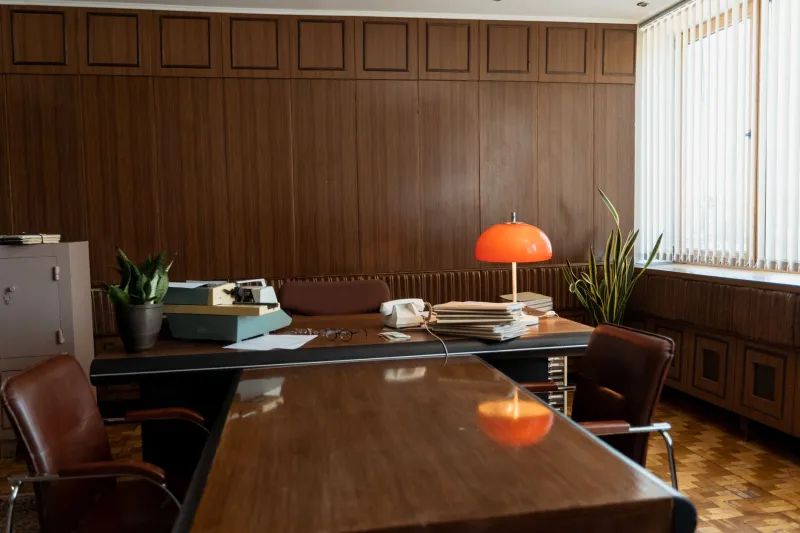
Let's be honest about what we're dealing with here. The motel desk chair is not trying to impress you. It's not memory foam. It doesn't have lumbar support. It was probably ordered from a wholesale furniture catalog sometime during the Clinton administration, and it shows. Maybe it's a straight-backed wooden number with a vinyl seat that sticks to your legs in July. Maybe it's a rolling chair that leans slightly to one side. Whatever the model, the message is the same: sit down, settle in, and get on with it.
And here's the thing — that message works.
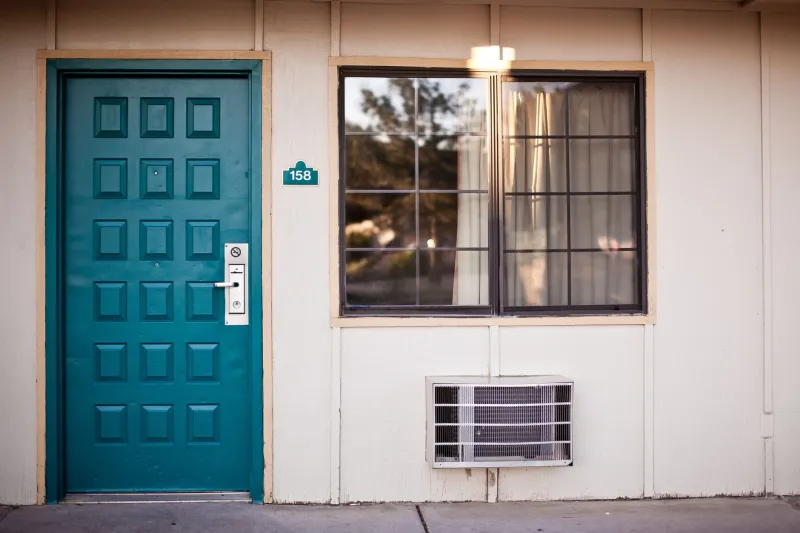
Travelers who spend time in small-town motels along mountain corridors from Montana to the Ozarks have started noticing something. Not the thread count. Not the WiFi speed. They're noticing what happens when they pull that desk chair out, angle it toward the window, and just... sit. No ambient noise machine. No curated playlist. No standing desk with a monitor arm and a ring light. Just a person, a chair, and whatever's going on outside the glass — a parking lot, a ridgeline, a two-lane highway disappearing into the trees.
Something about that setup cracks people open.
Why Discomfort Is Actually Doing You a Favor
There's a reason meditation teachers have been recommending wooden benches over plush cushions for centuries. A small amount of physical discomfort keeps the mind alert. When you're too comfortable — sunk into a sectional sofa, propped up by seventeen pillows — your brain slides toward passivity. You consume. You scroll. You half-watch something you've already seen.
But when your chair is firm and your surroundings are plain, your mind has no choice but to generate its own content. That's not a bug in the motel room experience. That's the whole feature.
Journalist and travel writer Dana Kellstrom, who spent three weeks driving through rural Wyoming and Montana for a long-form piece on agricultural towns, says the motel desk chair became her most important tool.
"I'd sit down every morning before I opened my laptop," she says. "Just sit. No phone. No notebook. The chair wasn't comfortable enough to zone out in, so I'd end up thinking — really thinking — about what I'd seen the day before. Some of my best story angles came from those twenty minutes in a chair I couldn't wait to get out of."
There's something almost accidental about the genius of it.
The Minimalism You Didn't Ask For
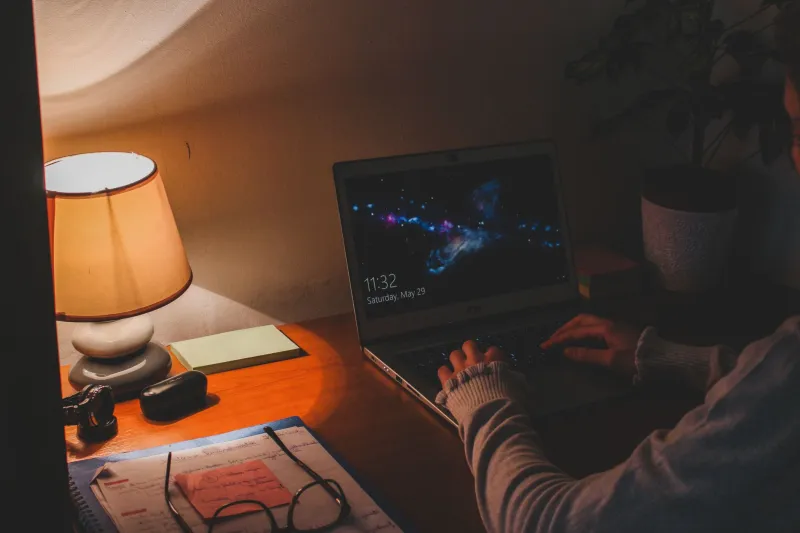
Modern home offices are aspirational spaces. Standing desks, cable management systems, motivational prints, blue-light glasses, noise-canceling headphones — we've built elaborate environments designed to support focus, and yet distraction has never been more rampant. The optimization has become its own form of procrastination.
A motel room in a small mountain town offers the opposite. You didn't design it. You don't own it. There's nothing to rearrange or upgrade. The desk is a desk. The chair is a chair. The lamp has one brightness setting. The window looks out at whatever it looks out at.
This enforced minimalism removes what psychologists call decision fatigue — the mental drain that comes from managing too many variables. When there's nothing to adjust, you stop adjusting and start thinking.
Small business owner Marcus Trevino discovered this during an unexpected overnight stay in a Montana motel while his truck was being repaired. With no laptop and a dying phone battery, he spent two hours in the desk chair staring at a road atlas he'd found in the nightstand drawer.
"I hadn't thought about where I actually wanted to take my business in years," he says. "I'd been too busy running it. That night, with nothing else to do, I mapped out a whole new direction. On the back of a road atlas page. In a chair that made my back hurt after forty minutes. It was the most productive evening I'd had in a decade."
The Window Changes Everything
Most motel desks are positioned near the window, and that placement matters more than you'd think. Unlike a home office view — which you've seen ten thousand times and your brain has learned to ignore — a motel window offers a genuinely foreign scene. A mountain you've never looked at before. A main street you've only just arrived on. A field that belongs to someone else's life entirely.
Novelty triggers attention. And attention, when there's nothing competing for it, turns inward.
Psychologists have long noted that new environments prompt deeper self-reflection. When we're in unfamiliar surroundings, we naturally ask ourselves questions: Where am I? Why am I here? What am I doing? In a big-city hotel, that novelty gets swamped by stimulation — room service menus, rooftop bars, concierge recommendations. But in a small-town motel, the novelty is quieter. It's a view of a grain elevator or a snow-dusted peak. It asks nothing of you. And in that asking of nothing, you find room to ask everything of yourself.
What You Actually Do in That Chair
People who've stumbled onto this practice describe it differently depending on who they are. Writers say they outline. Entrepreneurs say they strategize. Parents say they finally process things they haven't had time to feel. Solo travelers say they remember why they left home in the first place.
The chair doesn't care what you use it for. It's not coaching you or guiding you. It's just holding you upright, mildly uncomfortable, in a room that isn't trying to sell you anything.
Some practical observations from regular road travelers:
- Morning is best. Before the day's tasks crowd in, the desk chair and a cup of drip coffee from the in-room maker is a combination that's hard to beat for clarity.
- Leave your phone on the bed. The physical distance matters. Out of arm's reach is out of mind.
- Don't bring a notebook right away. Let thoughts form before you try to capture them. The notebook comes after.
- Face the window, not the wall. Even a parking lot gives your eyes somewhere to rest that isn't a screen.
The Motel Room as an Honest Space
There's a reason people talk about getting perspective when they travel. It's not just the distance from daily routine — it's the quality of the space they land in. A luxury resort is designed to delight and distract. A small-town motel is designed to shelter. That difference in intention creates a difference in experience.
When a room isn't trying to dazzle you, you stop performing for it. You stop being a guest in the curated sense and start being a person in the simple sense. And persons, it turns out, do some of their best thinking when they're slightly uncomfortable, mildly bored, and looking out a window at a mountain town they've never seen before.
The desk chair didn't earn its reputation. It doesn't have one. It's just there, waiting, the way honest things tend to wait.
Pull it out. Sit down. See what comes up.
You might be surprised what shows up when the only thing in the room asking for your attention is the view — and your own quieter thoughts.